
Technology QLS
QLS-scope HR
In optical microscopy, spatial resolution is fundamentally determined by the numerical aperture (NA) of the objective. While high-NA objectives provide excellent resolution, they are inherently limited by a small field of view and short working distance. For this reason, they are poorly suited for light-sheet microscopy of large biological samples, where wide volumetric coverage and unobstructed sample access are essential.
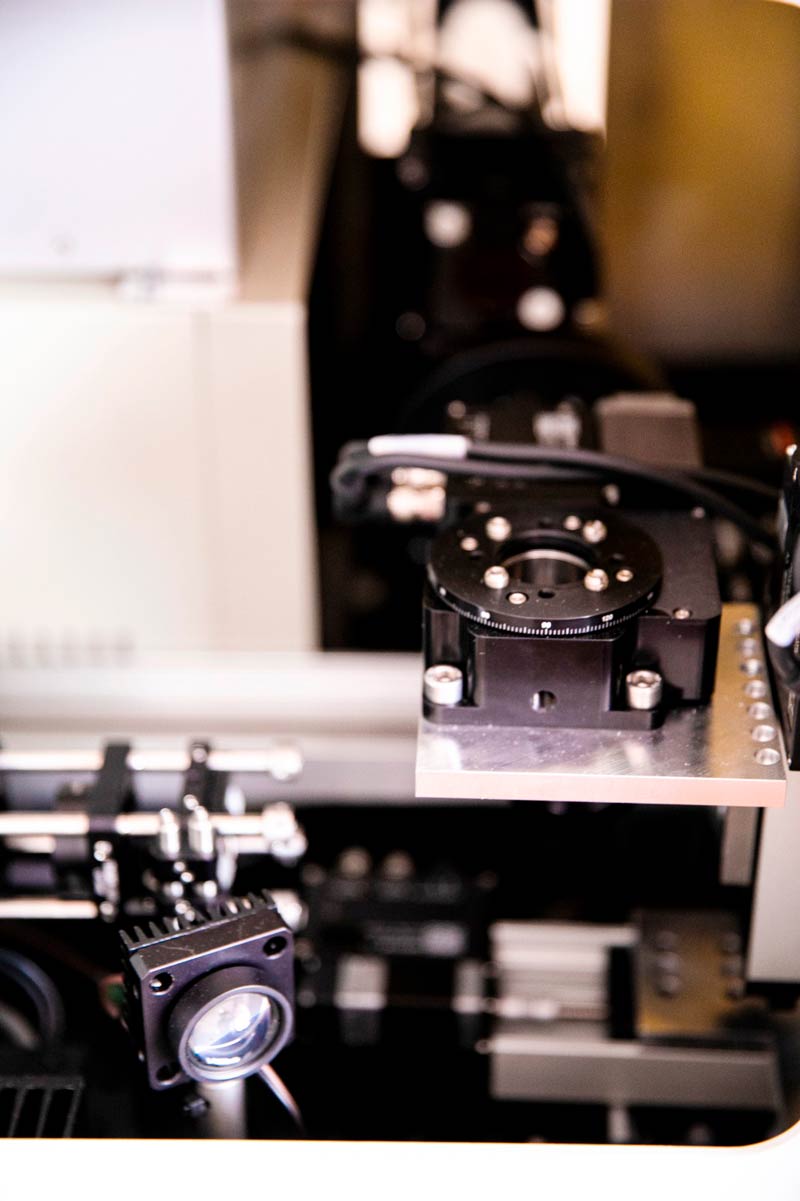
Our QLS-Clear HR is engineered to overcome this limitation by using long-working-distance immersion objectives combined with a wide range of magnifications and fields of view. This optical architecture enables imaging of intact, large specimens without physical sectioning or complex sample mounting.
By optimizing NA, working distance, and field of view at the system level, we deliver efficient, high-quality 3D imaging of large biological structures in their entirety while maintaining the resolution required for meaningful biological analysis.
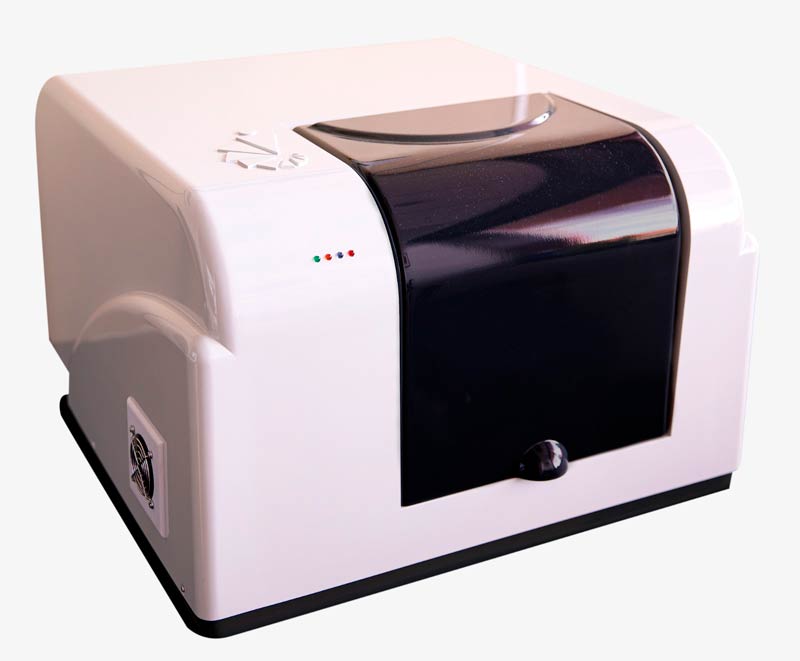
Key Features
- Sample rotation
- Motorized XYZ stage
- Double side illumination through 2X objectives
- White light Illumination for sample viewing
- SPIM and multi-angle SPIM
- Axially displaced light sheet for increased spatial resolution
- 4 laser lines
Specifications
|
Optics |
|
|
Light Sheet thickness |
approx. 1 µm |
|
Magnification |
3.20X – 22.50X |
|
Numerical aperture |
0.164 – 0.280 |
|
Field of view (mm) |
2.40 – 0.71 |
|
Resolving power (µm) |
2.04 – 1.20 |
|
Illumination |
|
|
Wavelength |
405, 488, 561, 640 nm Other wavelengths are also available upon request. |
|
Power |
Up to 30-65 mW, depending on the wavelength |
|
Detection |
|
|
Type |
sCMOS |
|
Pixel |
3000 x 3000 |
|
Sensor size |
11.280 x 11.280 mm |
|
Pixel size |
3.76 µm |
|
Maximum frame rate |
18 fps at full resolution |
|
Read noise |
< 3.4 e– at full resolution |
|
Cooling |
10oC with air cooling |
|
Imaging chamber |
|
|
Sample travel range (X, Y, Z) |
XYZ: 30 mm, 30 mm, 30 mm Step resolution 0.1 µm |
|
Sample rotation |
Up to 360o Accuracy 0.14o |
|
Sample size |
0.1 mm to 20 mm in diameter, 20 mm in length |
|
Operation conditions |
|
|
Permissible ambient temperature |
< 35 oC, 27 oC optimum |
|
Permissible relative air humidity (no condens.) |
< 65 % at 30 °C |
|
Size |
60 x 45 x 30 cm |
|
Weight |
70 kg for imaging unit, 5 kg for power supply/PC |
Applications
Whole-Organ & Large-Tissue Imaging (Cleared Samples)
- Cell counting across entire organs
- Spatial distribution of cell types
- Brain-wide neuron density mapping
- Layer-specific organization (cortex, hippocampus)
Pathology, Histology & 3D Diagnostics (Research Use)
- Volumetric histology of biopsies
- Tumor margin definition
- Structural pathology (fibrosis, necrosis)
- Spatial heterogeneity analysis
Developmental Biology & Organogenesis
- Cell migration during development
- Organ patterning
- Developmental defects
- Lineage tracing (fixed samples)
Cancer Research & Tumor Biology
- Tumor–immune cell interactions
- Spatial immune profiling
- Invasion fronts & metastasis niches
- Drug response heterogeneity
Immunology & Cell-Migration Studies
- Immune-cell localization
- Lymphoid organ architecture
- Infection and inflammation models
- Cell clustering & niches
Organoids, Spheroids & 3D Cell Models
- Large organoids (brain, liver, gut)
- Tumor spheroids
- Assembloids
- Drug penetration & viability mapping
Connectomics-Oriented Mesoscopic Imaging
- Mesoscopic brain atlases
- Cell-resolved connectivity statistics
- Registration to reference atlases
- Multimodal integration (MRI, scRNA-seq)
udies
- Immune-cell spatial distribution
- Lymph node architecture
- Inflammation models
- Host–pathogen interactions
Tissue Engineering & Regenerative Medicine
- Thick organoids and assembloids
- Bioprinted tissues
- Cell-scaffold integration
- Vascularization of engineered constructs
Plant Biology & Large Botanical Samples
- Root system architecture
- Vascular transport studies
- Developmental gradients
- Stress and pathogen response